
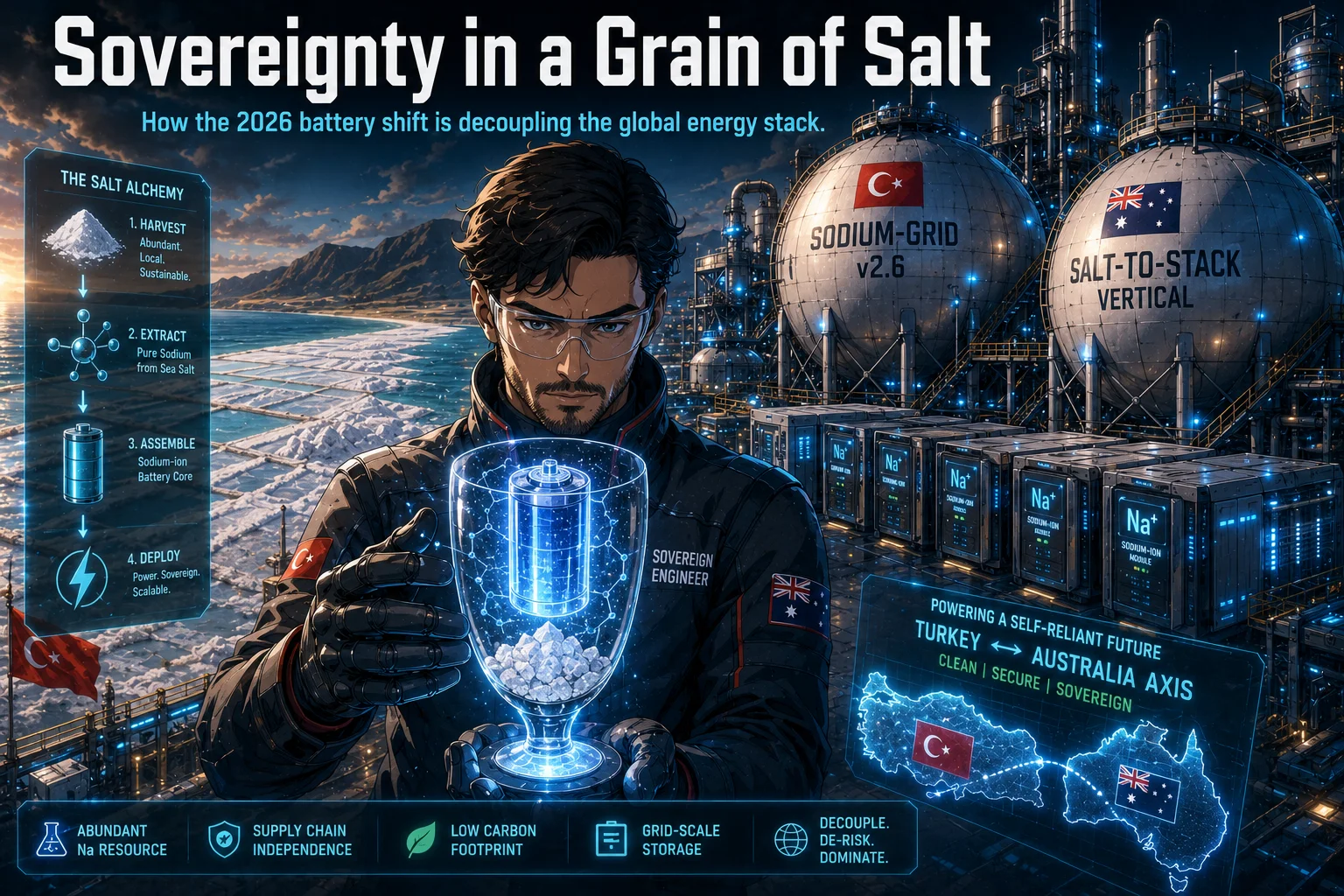
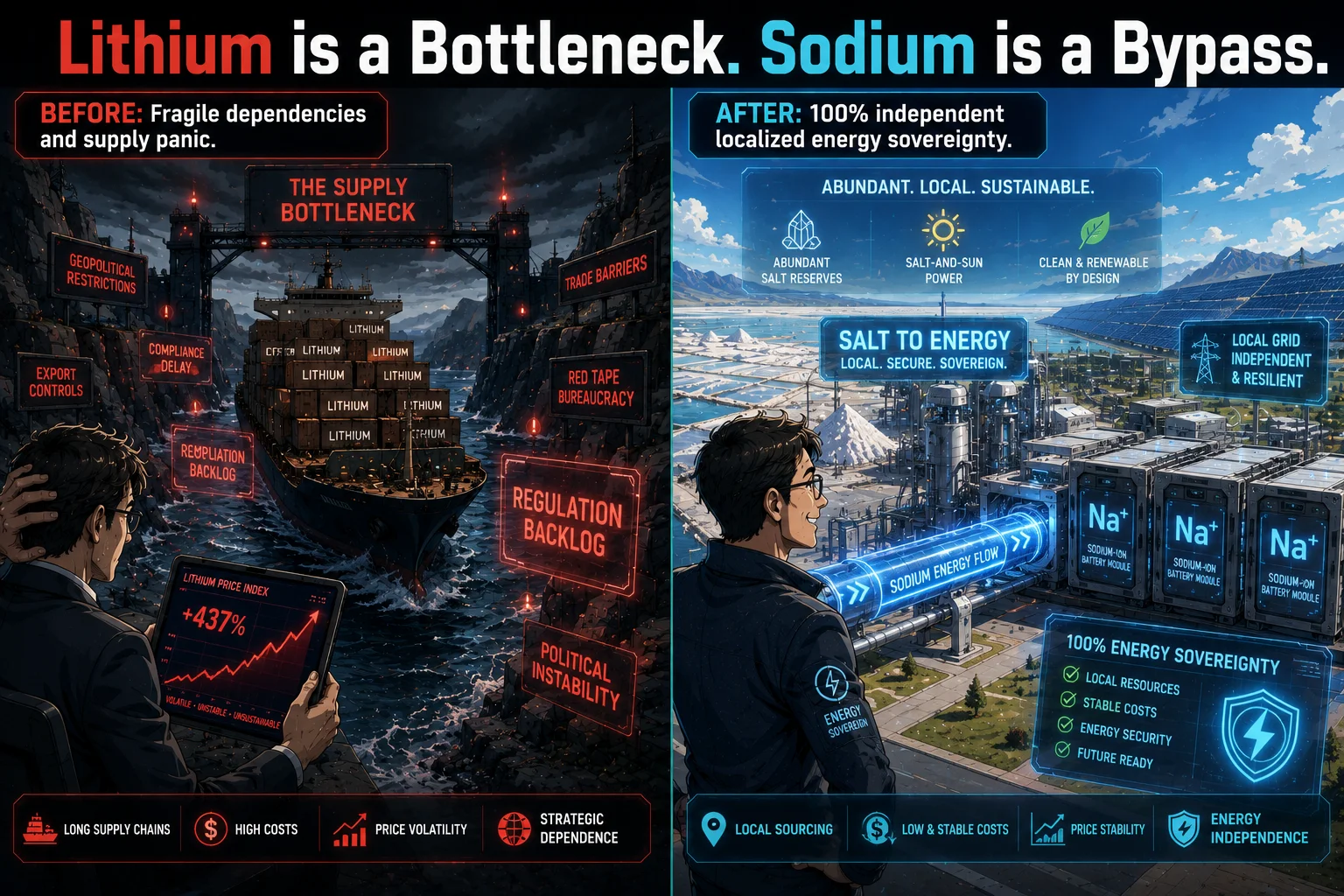
I’m honestly just over the Lithium bottleneck. While everyone else is still obsessing over finding new mines in the “Lithium Triangle,” nations like Turkey and Australia have already found the bypass. It’s basically just common salt.
Sodium-ion isn’t just some “budget” backup plan for cheap scooters or something. In 2026, it’s the only real path to Energy Storage Sovereignty. It’s everywhere, it’s cheap, and it’s how we finally break free from these fragile, high-stakes supply chains. I’m betting everything on salt.
The Scarcity Lie
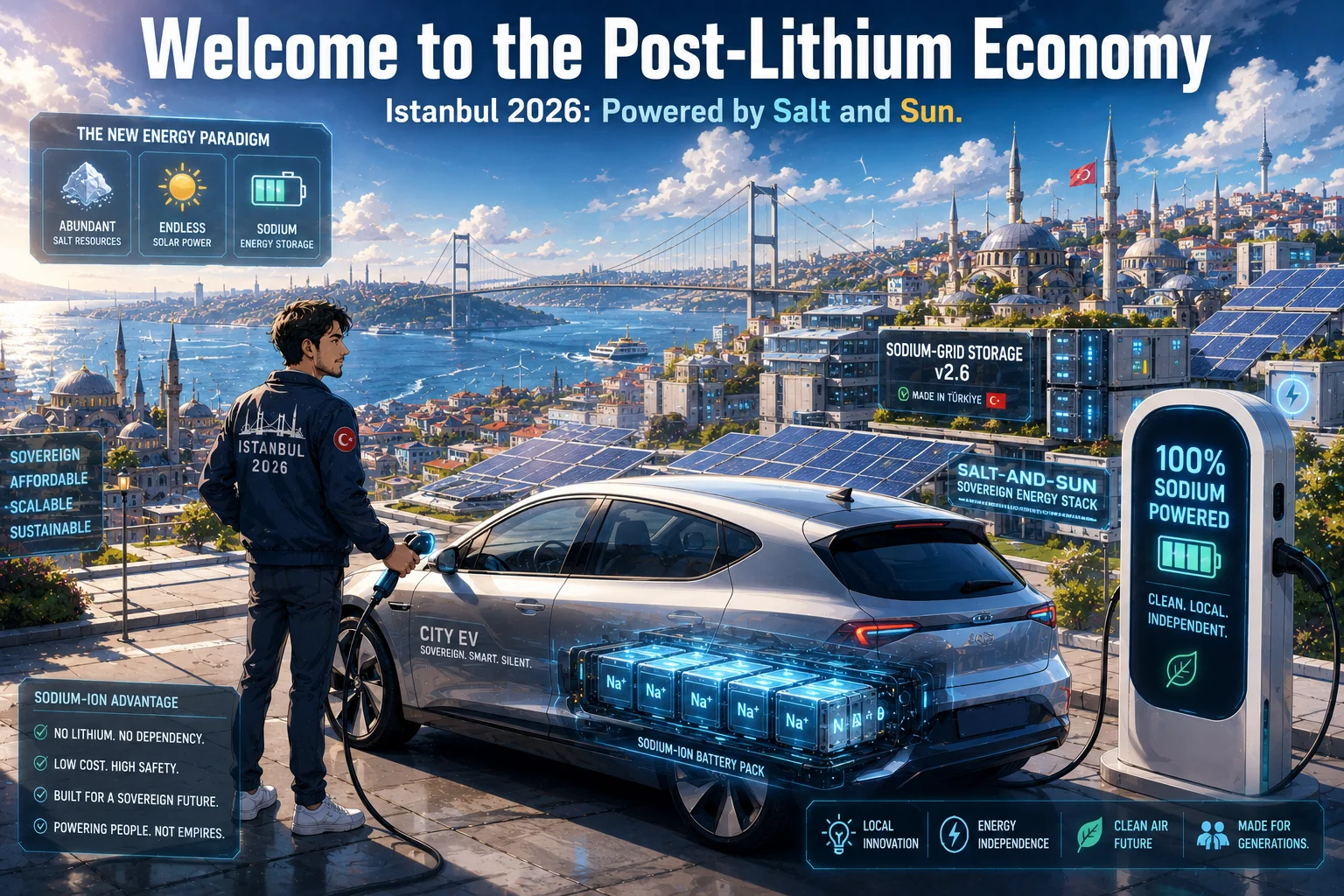
Most analysts keep telling us we’re stuck with Lithium for another decade. They’re just wrong. They’re totally ignoring the fact that stationary grid storage—the actual infrastructure that keeps your lights on—is already like 40% Sodium-powered.
True sovereignty isn’t about owning a hole in the ground in a foreign country. It’s about synthesizing the solution right where you stand. Lithium keeps us tied to the old world order. Sodium lets us build something new. As I saw while writing my Energy and Compute report, if you control the storage, you control the future.
Why Turkey and Australia are actually winning
They basically stopped waiting for “global prices” to drop. They used the massive salt reserves they already had and built the whole chemical stack from the ground up. They’ve completely decoupled their grid from the US-China trade wars. This is Sovereign Engineering at the atomic level. I honestly find it beautiful.
The Reality Check
The “Lithium Premium” is basically over. Sodium-ion has dragged the price of stationary storage down by like 60%. This is the only reason local LLM clusters—the Sovereign AI Stack—are suddenly affordable for indie setups and smaller countries.
We stopped mining for energy and we started synthesizing it. It’s probably the smartest move we’ve made in decades.
I’m digging into the energy-compute overlap every day. If you want the deep technical analysis without the fluff, subscribe.